The Hidden Cost of Per-Seat Pricing: Why Small Teams Pay Enterprise Prices
Your 5-person team shouldn't pay the same per-user rate as a 500-person enterprise. Here's why per-seat pricing is broken—and what alternatives exist.
The $2,000 Wake-Up Call
Imagine this scenario: You've been using Asana's free plan for a year with your 14-person team. Everything works great. Then you need to add three more people.
Suddenly, you're looking at a bill of $229 per month—or $2,241 annually—just to accommodate growth.
This isn't a hypothetical. It's the reality small teams face every day with per-seat pricing models. And it's why more teams are actively searching for alternatives.
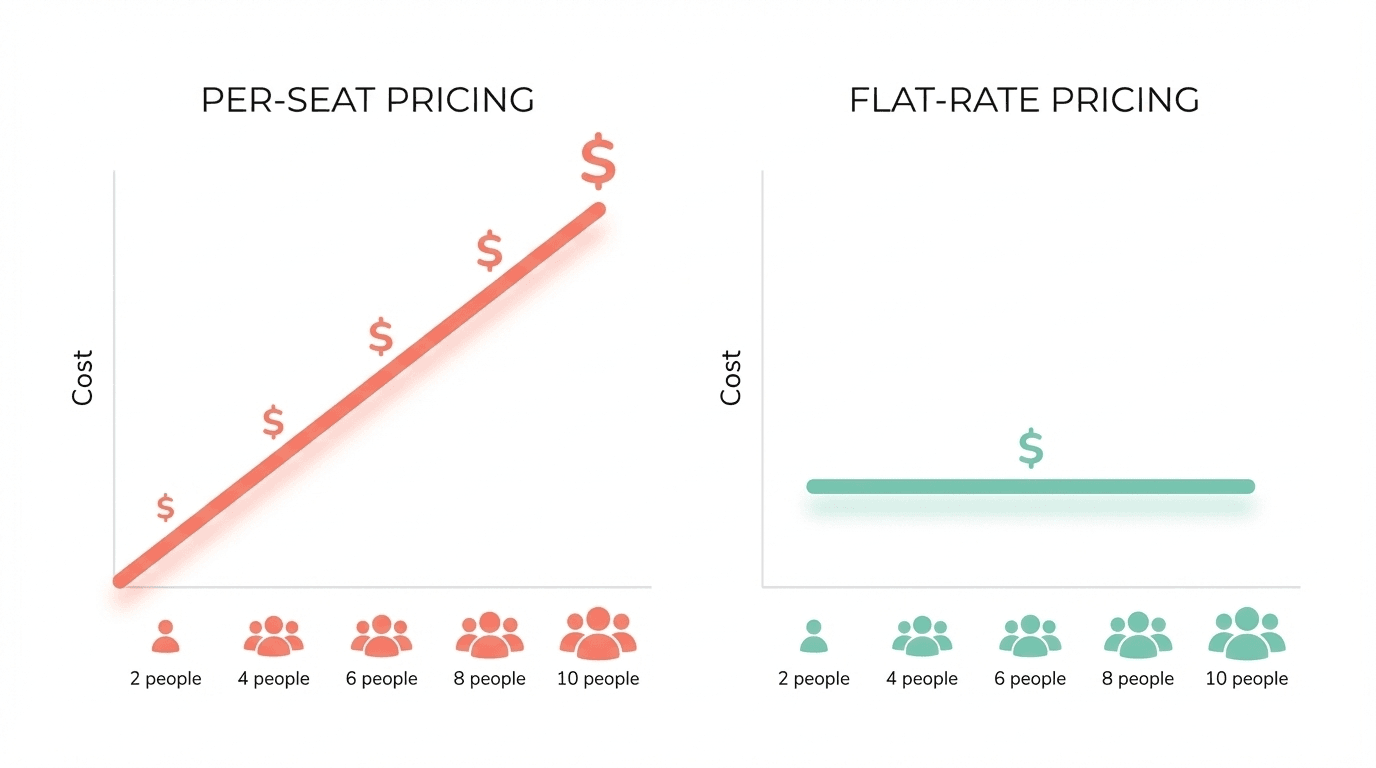
What Users Actually Say About Per-Seat Pricing
We analyzed dozens of real user complaints across Trustpilot, G2, Reddit, Hacker News, and official feedback forums. The frustration is universal.
Asana: The Minimum Seat Trap
Asana currently holds a 1.6 out of 5 stars on Trustpilot. The most persistent complaint—running for over six years on their own forum with 200+ supporting votes—centers on forced minimum seat purchases.
One solo entrepreneur captured the frustration perfectly: They fell in love with Asana during a Premium trial, only to discover they couldn't purchase just one seat. The minimum requirement forced them to pay for phantom users they'd never use.
Even worse, some users report being automatically upgraded from 2 seats to 10 seats without notification or consent—discovering the change only when reviewing their bills months later.
ClickUp: The Guest Conversion Surprise
ClickUp users report what many describe as "unethical business practices." The core issue: guests on the same email domain get automatically converted to paid "limited members" without warning.
One user described their shock at discovering their costs had doubled overnight—not because they added features, but because ClickUp silently reclassified their guest users.
For agencies and freelancers who rely on client collaboration, this creates an impossible situation: either absorb massive unexpected costs or remove clients from the platform entirely.
Linear: Building Alternatives to Avoid Fees
Linear generally receives praise for its developer experience, but even satisfied users hit pricing walls. One developer was so frustrated with paying $15/month per user just for read-only roadmap access that they built and launched their own alternative tool.
When your pricing model drives users to create competing products, something is fundamentally broken.
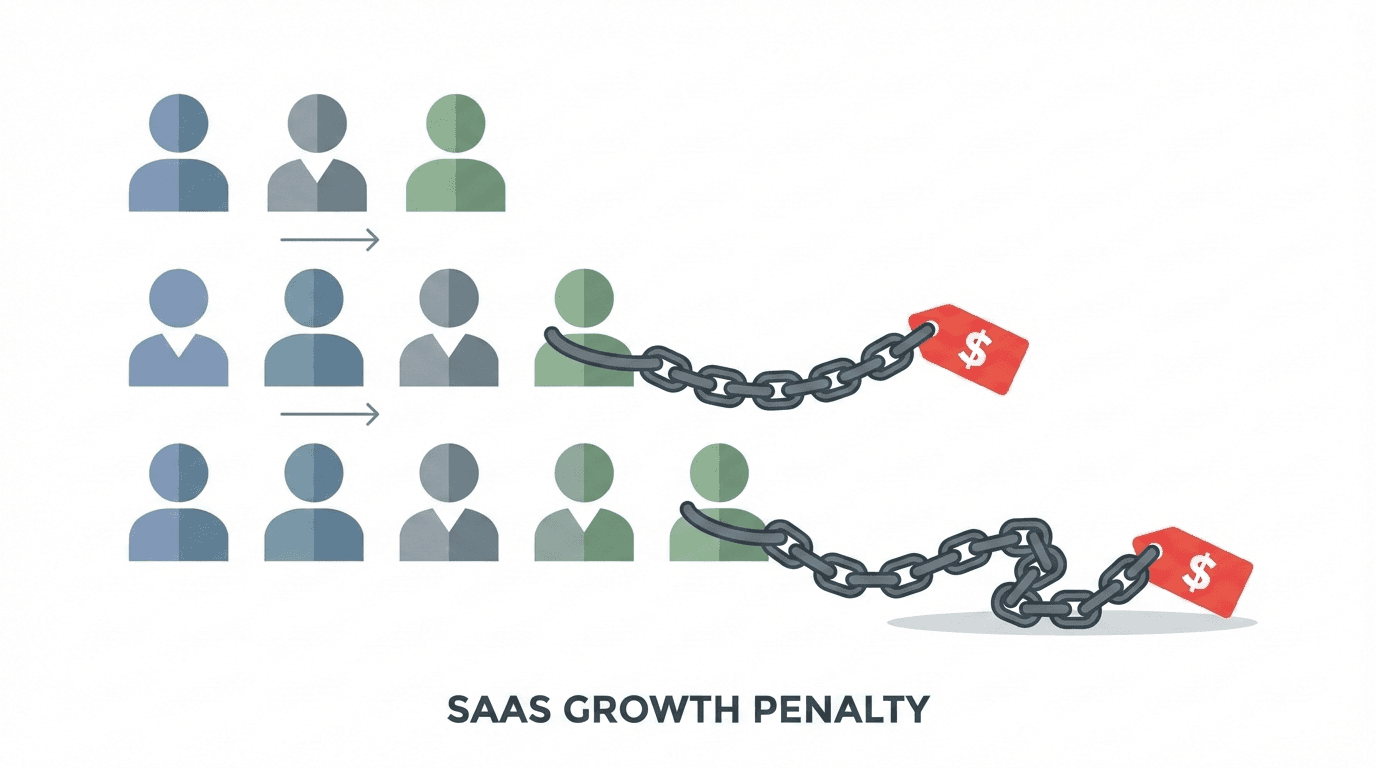
The Three Core Problems with Per-Seat Pricing
Problem 1: Growth Becomes a Tax
Every new hire means a new recurring cost—not for additional value, but for the same software you already had.
As one Hacker News user put it: With 10 users paying per-seat across five different tools, you have to decide whether your 11th employee is "worth" $1,000/year in software costs alone. This creates internal politics that have nothing to do with the software's actual value.
Problem 2: The Phantom User Problem
Small teams often need to include people who barely use the software:
- Clients who only need to view progress
- Contractors who work on one project then leave
- Stakeholders who check in monthly
Under per-seat pricing, a CEO who logs in once a quarter pays the same as your power users who live in the tool daily.
Problem 3: Budget Unpredictability
Per-seat pricing makes software budgets impossible to forecast. Hire two people? Your costs jump. A project needs temporary contractors? More seats. A client wants visibility? Even more.
For bootstrapped startups and small agencies, this unpredictability is painful.
The Most Common Pricing Complaints (Ranked)
Based on our research across 51 distinct user complaints:
| Pain Point | Frequency | Who's Hit Hardest |
|---|---|---|
| Full price for limited-access users | Very High | Agencies, freelancers |
| Hidden minimum seat requirements | High | Solo founders, tiny teams |
| Surprise charges and fee increases | High | All small businesses |
| Features locked behind expensive tiers | High | Growing teams needing specific features |
| Costs that punish growth | Medium-High | 5-20 person companies |
| Price increases over time | Medium | Long-term customers |
What Small Teams Actually Need
The disconnect between enterprise pricing and small team needs is stark:
What enterprise tools offer:
- Complex workflows with dozens of automation rules
- Granular permission systems for 50+ roles
- Enterprise SSO and compliance features
- Dedicated account managers and SLAs
What most small teams need:
- A simple place to track tasks
- Basic collaboration features
- Affordable pricing that doesn't punish growth
- The ability to add team members without budget meetings
You shouldn't need a 500-page feature list when your team fits around a single conference table.
Alternative Pricing Models That Work
The backlash against per-seat pricing has opened space for alternatives:
Flat-Rate Pricing
One price, unlimited users. Basecamp pioneered this at $99/month, though that price point still excludes many small teams. Newer tools are emerging at more accessible price points—some as low as $12/month for unlimited team members.
Active User Pricing
Slack's approach: only charge for users who actually log in. If someone doesn't use it, you don't pay. Simple.
Usage-Based Pricing
Charge based on what teams actually consume—storage, API calls, or projects—rather than headcount.
Tiered with User Add-Ons
Core pricing by features, with users as optional extras. This aligns cost with actual value delivered.
Questions to Ask Before Choosing a Tool
Before committing to any task management platform, protect yourself with these questions:
-
What's the real minimum? Don't assume you can buy one seat. Check the fine print.
-
How are guests handled? Will collaborators, clients, or contractors trigger additional charges?
-
What happens when you grow? Calculate costs at 5, 10, and 20 users. Do the economics still work?
-
What's locked behind paywalls? Features you need today might require an upgrade tomorrow.
-
What's the pricing history? Check review sites for complaints about unexpected increases.
The Bottom Line
Per-seat pricing made sense when software was expensive to host and support at scale. In 2025, with cloud infrastructure costs at historic lows, charging the same per-user rate regardless of team size is simply extractive.
Small teams deserve tools built for their reality—not enterprise software with a smaller price tag.
The good news: alternatives exist. The market is finally responding to what small teams have been asking for all along: simple tools at fair prices that don't punish you for growing.
Looking for a task management tool that doesn't charge by the seat? Heimin offers flat-rate pricing at $12/month for your entire team—whether you're 2 people or 10. No per-user fees. No surprise charges. No phantom seats.